

Comprehensive Eye Exams & OCT Imaging
Your vision is only one part of the picture. At Oculus Dexter Optometry in Spotswood, Melbourne, our eye examinations consider how you see, how your eyes feel and the health of your eyes. When appropriate, OCT imaging gives us a more detailed view of the retina and optic nerve to help guide your care.
Good eye care looks beyond the prescription.

An eye examination does more than determine whether you need glasses. It can assess how clearly you see, how your eyes work together and the health of the structures at the front and back of your eyes. Some eye conditions develop before you notice a change in vision, so regular checks can be valuable even when everything seems fine.
At Oculus Dexter, we start with your concerns, daily visual demands and eye-health history.
Whether you have noticed a change in your vision, are experiencing discomfort or are due for a routine review, your optometrist will tailor the assessment and explain the findings in plain language.
What to expect
We begin with advanced pre-testing using the Rodenstock DNEye® Scanner. This technology takes detailed measurements of how your eyes focus at different distances, including pupil size and subtle optical variations. The results give our optometrists valuable information to guide your examination and, where appropriate, help create spectacle lenses tailored to your individual vision.
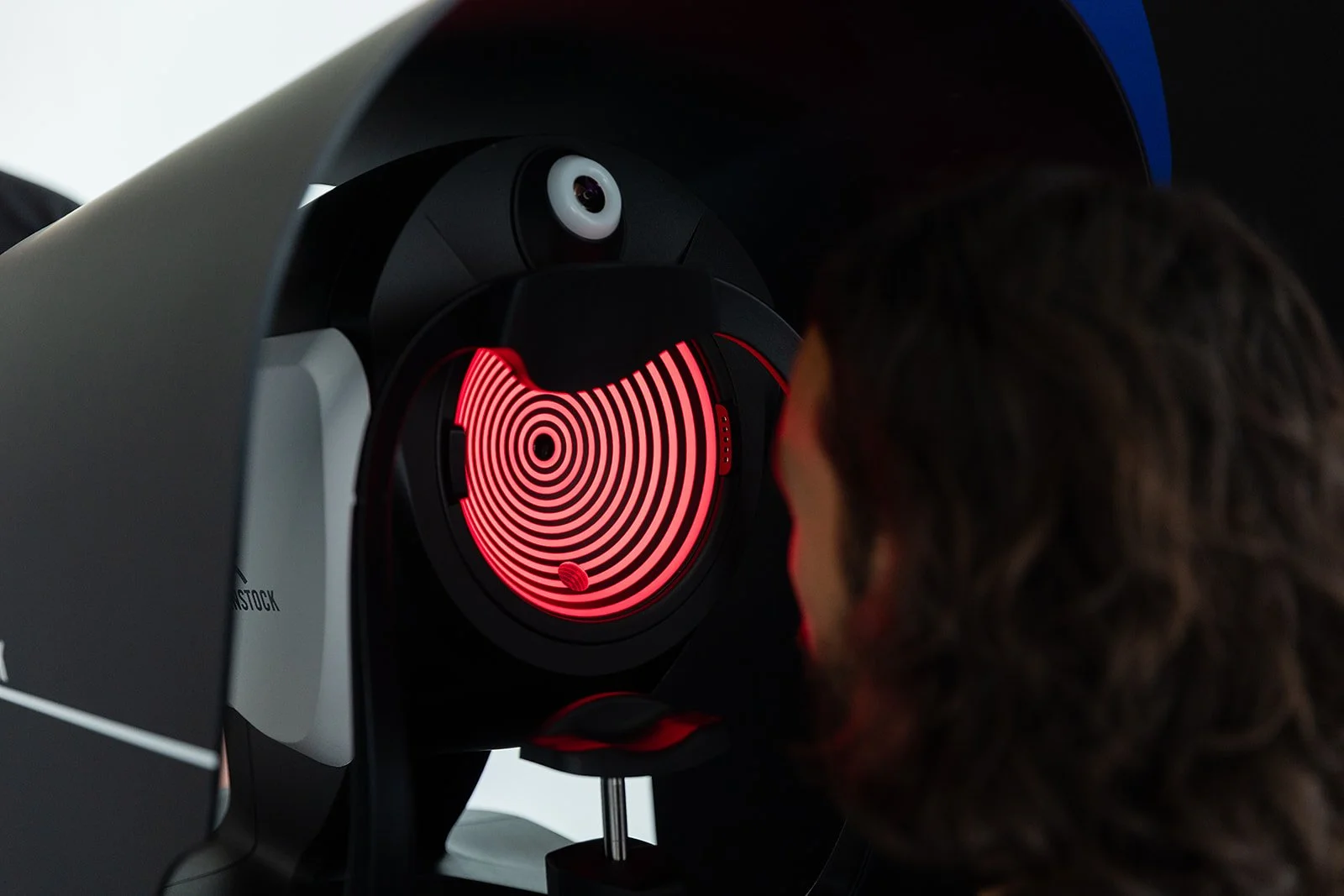
01 Advanced Pre-Testing with DNEye®
Your optometrist will check your vision and eye health using tests suited to your needs. These may include prescription testing, eye-pressure measurements, retinal assessment or OCT retinal imaging where clinically appropriate.
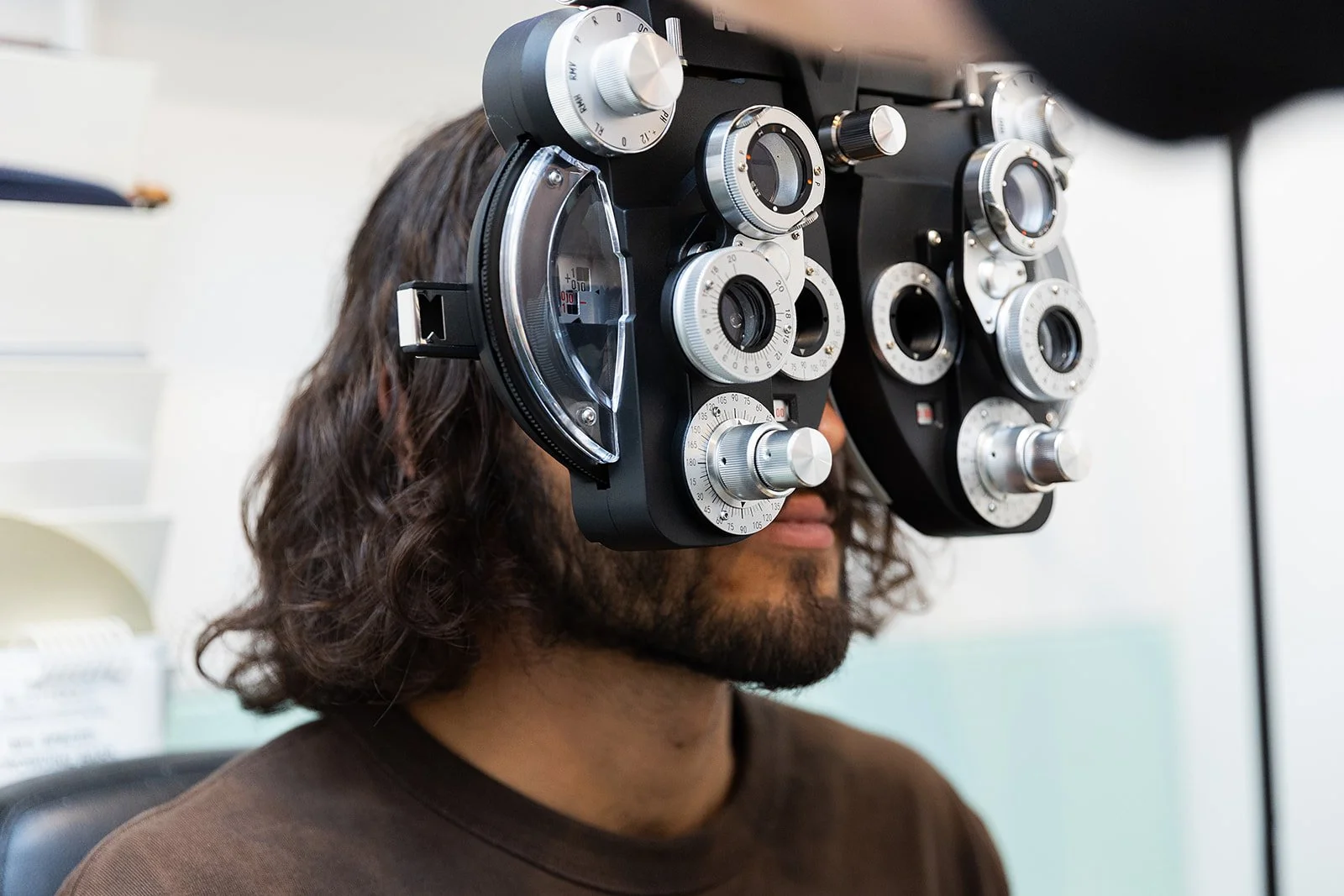
02 We assess vision and eye health
You’ll receive clear advice about your results, any changes to your prescription and whether monitoring, treatment or referral is recommended. We allow extra time and explain things in clear language; we want you to understand what we’ve found and why it matters.
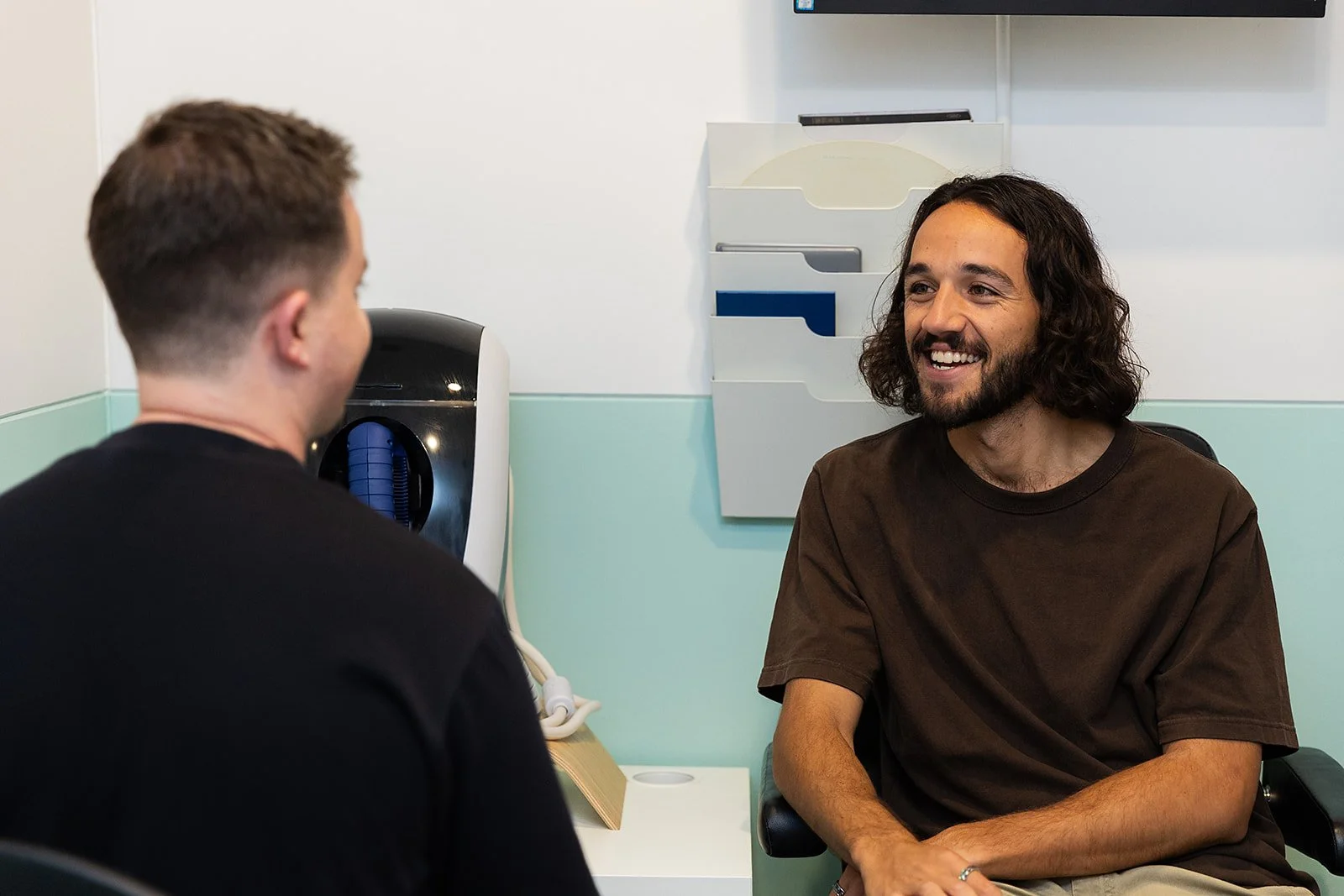
03 We explain the next steps
REVO FC - Spectral-Domain OCT | Color Fundus Camera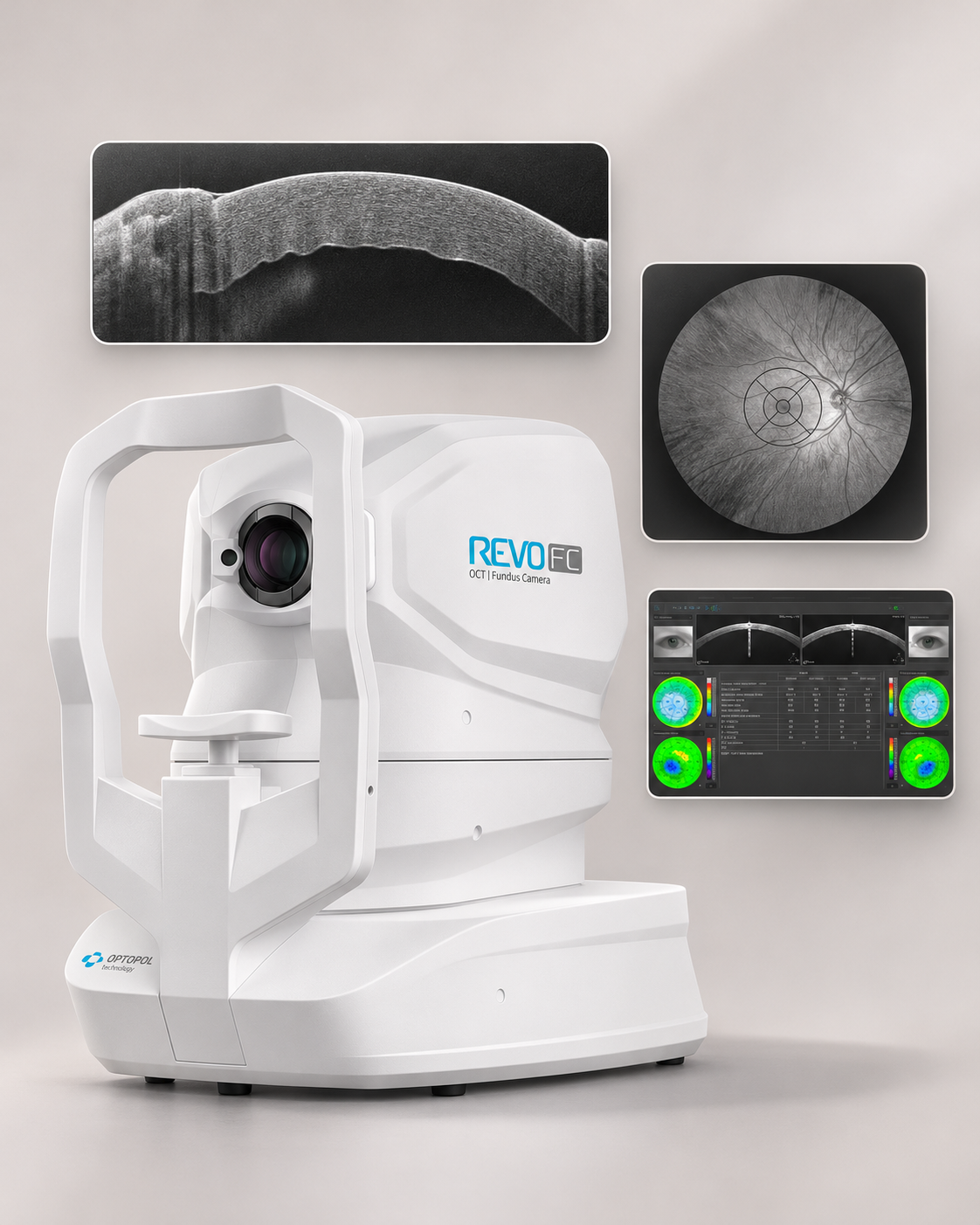
What is an OCT eye scan?
Optical coherence tomography (OCT) is a non-invasive imaging technique that uses light to create detailed cross-sectional pictures of the retina and optic nerve. A conventional retinal photograph shows the surface of the back of the eye; OCT helps us examine important layers beneath that surface.
These images can provide additional information when assessing or monitoring eye conditions such as glaucoma, age-related macular degeneration and diabetic eye disease. OCT can also help your optometrist compare structural changes over time. It is one part of a comprehensive assessment, not a diagnosis on its own.
An OCT scan does not touch the eye and does not use X-rays. Your optometrist will advise whether it is appropriate based on your symptoms, clinical findings and individual risk factors. At Oculus Dexter, advanced technology supports thoughtful clinical judgement and a conversation you can understand.
Good to know…
-
A comprehensive eye examination generally includes questions about your vision and health, checks of how clearly you see and an assessment of eye health. Depending on your needs, your optometrist may recommend additional tests, such as eye-pressure checks, retinal imaging or OCT. Not every person needs every test; the examination is guided by your history, symptoms and findings.
-
Eligible optometry consultations may attract a Medicare rebate, but not every service or additional test is necessarily covered. Whether you have an out-of-pocket cost depends on the appointment, your Medicare eligibility and the practice’s fees. If you would like to confirm the cost of an examination or OCT imaging, please contact our team before booking.
-
Yes! If you are covered by optical extras, you may be able to claim towards prescription glasses, lenses or contact lenses. Benefits depend on your policy and remaining limits, so check your cover with your health fund and bring your membership details along to your visit.
-
Many adults are advised to have an eye test every two to three years, but the right interval varies. You may need more frequent checks if you have diabetes, a family history of eye disease, existing eye-health concerns or changes to your vision. Your optometrist can recommend a suitable review schedule based on your individual circumstances.
-
Sudden vision loss, a dark curtain or shadow across your vision, or a sudden increase in floaters or flashes of light may need emergency assessment. Do not wait for a routine online eye-test appointment if you experience these symptoms: seek urgent medical attention. For other new or persistent changes, contact the practice so you can arrange appropriate care.
-
A retinal photograph captures an image of the surface at the back of the eye. An OCT scan uses light to create cross-sectional images of retinal layers and the optic nerve, revealing structural detail that an ordinary photograph cannot show. OCT is non-contact and does not use X-rays. Your optometrist will explain whether it is useful for your examination.